Construction projects involve different activities, from preparing uneven ground and digging foundations to transporting heavy materials across busy job sites. Each task requires machinery capable of handling specific workloads while maintaining productivity and safety. Choosing equipment that supports multiple applications can help contractors reduce operational costs, improve equipment utilization, and manage changing project requirements. Understanding the capabilities of different machines is essential for making informed purchasing decisions and building a reliable construction fleet.
Understanding Equipment Requirements for Different Applications
Every construction project presents unique challenges related to terrain, material weight, working space, and project duration. Earthmoving operations typically require machines with strong digging capabilities, while material handling tasks demand equipment designed for lifting, transporting, and positioning heavy loads.
Before exploring construction equipment for sale, contractors should evaluate their most frequent activities and identify machinery that can perform several functions. Equipment versatility becomes particularly valuable for businesses managing residential developments, commercial construction, roadwork, and industrial projects.
Selecting machines based on actual operational requirements helps prevent unnecessary purchases and ensures that equipment investments contribute to long-term productivity.
Excavators for Digging, Grading, and Site Preparation
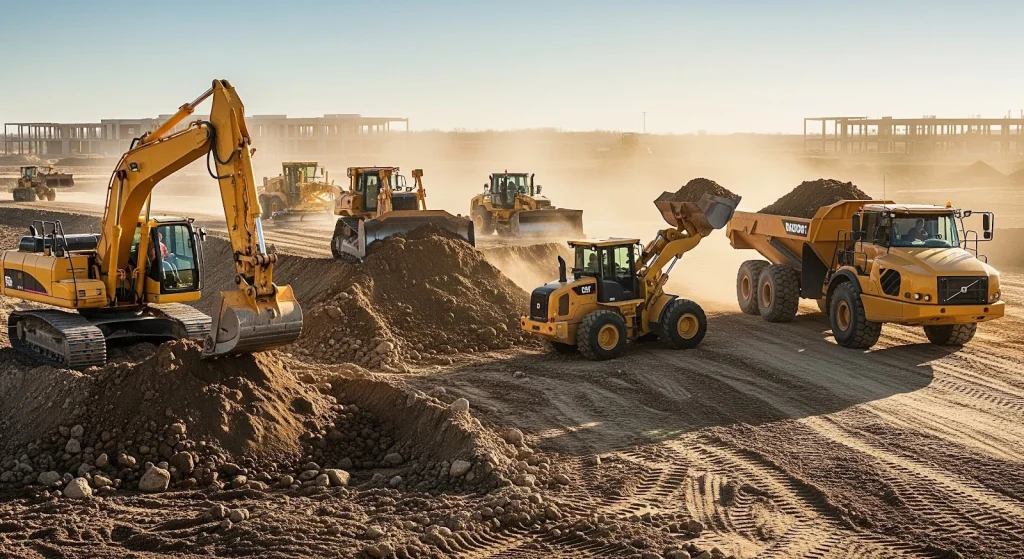
Excavators are among the most adaptable machines utilized in construction operations. Their primary function involves digging trenches, foundations, and drainage systems. However, modern excavators can also perform demolition, material sorting, and site clearing when equipped with appropriate attachments.
Hydraulic systems provide the power required for demanding excavation tasks, while different bucket sizes allow operators to handle various soil conditions and material volumes.
Compact excavators are particularly useful in restricted spaces where larger machines cannot operate efficiently. Full-sized excavators offer greater digging depth, lifting capacity, and reach for extensive earthmoving projects.
Contractors should consider operating weight, hydraulic performance, digging depth, and attachment compatibility before selecting an excavator.
Wheel Loaders for Efficient Material Movement
Wheel loaders play an important role in transporting loose materials such as gravel, sand, soil, and construction debris. Their front-mounted buckets allow operators to collect, lift, and move substantial quantities of material efficiently.
These machines are especially valuable on projects requiring continuous loading operations. They can transfer materials into trucks, organize stockpiles, and support general site maintenance.
Wheel loaders also accommodate specialized attachments, including pallet forks and material handling buckets. This flexibility allows contractors to use the same machine for different activities throughout a project.
When comparing wheel loaders, important considerations include bucket capacity, breakout force, maneuverability, and fuel consumption.
Skid Steer Loaders for Compact Job Sites
Skid steer loaders provide excellent maneuverability and versatility, making them suitable for projects with limited working space. Their compact design enables operators to navigate confined spaces while performing duties such as grading, excavation, debris removal, and material transportation.
One major advantage of skid steer loaders is their compatibility with numerous attachments. Augers support drilling applications, trenchers assist with underground utility installation, and pallet forks simplify material handling.
Contractors working on landscaping, residential construction, and property development projects often benefit from machines that can transition between tasks without requiring additional specialized equipment.
Telehandlers for Lifting and Positioning Materials
Material handling becomes increasingly challenging when construction activities involve elevated work areas or difficult access points. Telehandlers provide an effective solution through their telescopic booms, which extend outward and upward to position materials.
These machines are commonly used to lift pallets, construction supplies, and other heavy loads to designated locations.
Unlike conventional forklifts, telehandlers offer extended reach and improved accessibility on uneven construction sites. However, their lifting capacity changes depending on boom extension and operating conditions.
Buyers should carefully review load charts, maximum lift height, horizontal reach, and stability requirements before investing in this equipment.
Backhoe Loaders for Combined Excavation and Loading
Backhoe loaders combine two essential construction functions within one machine. A front loader bucket handles material movement, while a rear excavating arm supports digging and trenching operations.
This combination makes backhoe loaders practical for utility installation, road maintenance, small construction projects, and general property development.
Instead of transporting separate machines for excavation and loading, contractors can complete multiple activities using one piece of equipment.
Their versatility can reduce transportation expenses and simplify equipment management, particularly for contractors handling smaller projects with changing operational requirements.
Evaluating Equipment Versatility and Operating Costs
Purchasing versatile machinery requires more than comparing horsepower and lifting capacity. Contractors must also evaluate maintenance requirements, fuel efficiency, equipment durability, and available service support.
Machines that support multiple attachments can improve utilization, but attachment compatibility should always be verified before purchasing.
Operating costs also depend on equipment size, working conditions, and maintenance schedules. Choosing machinery that closely matches typical workloads helps avoid unnecessary fuel consumption and excessive component wear.
Reliable dealer support, replacement parts availability, and operator training further contribute to long-term equipment performance.
Conclusion
Selecting construction equipment for multiple applications requires balancing versatility, performance, and operational efficiency. Excavators, wheel loaders, skid steer loaders, telehandlers, and backhoe loaders each provide distinct advantages for earthmoving and material handling activities.
Contractors who carefully evaluate project demands, equipment capabilities, and ownership costs can build fleets that support diverse construction operations. Investing in adaptable machinery helps improve productivity, reduce unnecessary equipment expenses, and maintain consistent performance across different job site conditions.